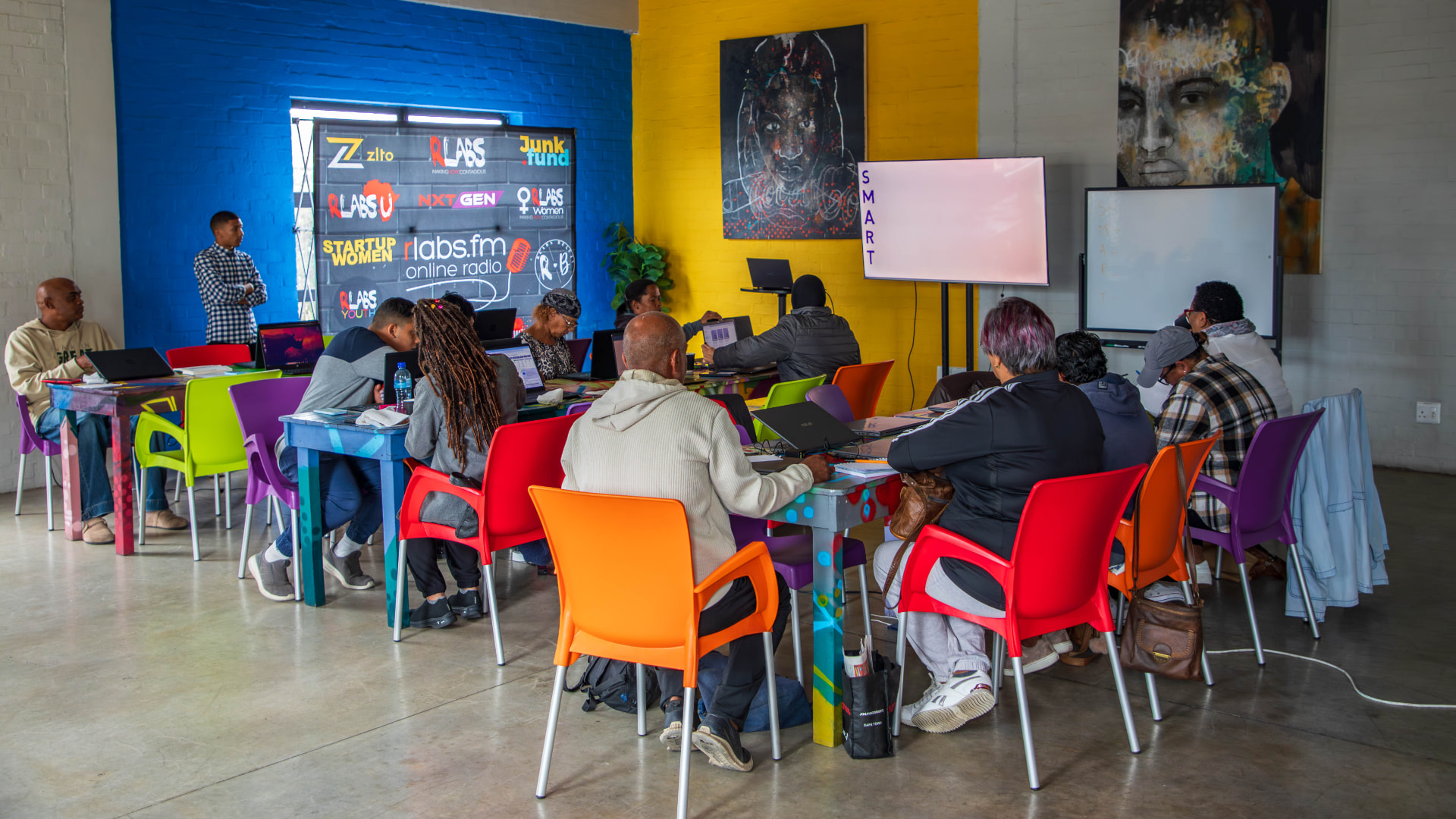

Young entrepreneur presenting a business idea
FRED Idea2Startup

From an idea to a validated business.

Idea2Startup is the second stage of the FRED pipeline: a practical, hands-on programme for young entrepreneurs who already have a business idea and the conviction to pursue it.

Overview

It is not theory.

Facilitator working with a participant beside a laptop

Idea2Startup is the second stage of the FRED pipeline: a practical, hands-on programme for young entrepreneurs who already have a business idea and the conviction to pursue it. Graduates of the FRED Youth Entrepreneur Program apply to attend.

By the end, every participant leaves with a validated idea, a clear business model, and a real first customer in sight; validated ideas then move into a full business plan.

Who it's for

Graduates with conviction. By application only.

Graduates of the FRED Youth Entrepreneur Program who truly wish to, and have the conviction to, pursue their business idea.

The four phases

Prepare. Build. Validate. Refine.

PHASE 01
Phase 1 - Preparation
20 hours, before the bootcamp
Self-managed prep: learn who you're trying to help, talk to 5 real people, find your first 10 potential customers, ask whether enough people need this
PHASE 02
Phase 2 - In-person bootcamp
2 days
Show your evidence and get honest feedback, build your before-and-after value story, find your biggest untested assumption, build your business model on one page, pitch to a real panel
PHASE 03
Phase 3 - Validation & evidence building
20 hours, after the bootcamp
Self-managed: run your experiment, work out if the unit economics make sense, name your first 10 customers, graduate with real-world evidence
PHASE 04
Phase 4 - Presentation of findings & refinement
Variable
Prepare a pitch presentation on your findings, sent to the FRED team, who provide feedback and guidance
The frameworks behind it

Proven method, applied to real ideas.

MIT Disciplined Entrepreneurship

FRED shares the founding belief that entrepreneurship is a teachable craft. Idea2Startup follows its logic closely: start with the customer, talk to real people, find the first ten customers, and test whether enough people genuinely need the idea, reflecting the rule that the only proof that matters is a paying customer.

Business Model Canvas & Value Proposition Design

Osterwalder's customer-first thinking. Value Proposition Design starts with the customer's life before and after; the Business Model Canvas zooms out to the whole business across nine building blocks - customer segments, value proposition, channels, customer relationships, revenue streams, key activities, key resources, key partners and cost structure.

What participants leave with

Evidence, not optimism.

A completed, validated Business Model Canvas and Value Proposition Design Canvas
A clear value proposition making it obvious what changes for the customer
Evidence from real customer conversations
A named first potential customer, or a top-10 list of next customers
A business model that makes basic financial sense
A business plan including a go-to-market strategy
Documented core business processes
A website and a social media set-up and management strategy
A pitch-ready presentation
A roadmap to open, including CIPC registration, business bank account setup and accounting software
A FRED Idea2Startup Certificate of Completion, and the beginnings of an EOS strategy execution framework